

We know that it’s the victors who write history, and that only the big moments are recorded.
We remember that before antibiotics, people died young and often, from simple infections. We celebrate VE Day when the war in Europe finally ended. We rejoice that on 27 April 1994, the horrid regime of apartheid ended. We refer to the Holocaust and the liberation of Auschwitz. We learn in school that segregation laws were struck down in the United States in 1964. We remember the joyous celebrations as the Berlin Wall came crashing down in 1989, signalling the end of the Cold War. We recall how French peasants stormed the Bastille and how the tsar finally abdicated in Russia, clearing the way for Lenin and his Bolsheviks to seize power a few months later.
But behind every headline and every date in the textbooks were thousands of unnamed people, consistently doing small, stubborn things that slowly changed the world.
It was an exhausted lab worker in Germany who was too tired to wash a few petri dishes and discovered penicillin. His procrastination saved millions of lives.
Oskar Schindler and armies of brave teachers, farmers, nuns, priests, and neighbours hid families in barns, convents, attics, or smuggled them over borders, saving thousands of Jews to tell their story.
A slightly hungover border guard, Harlad Jäger misunderstood an order and simply opened the gate at Bornholmer Straße, effectively starting the fall of the Berlin Wall as crowds pushed their way through.
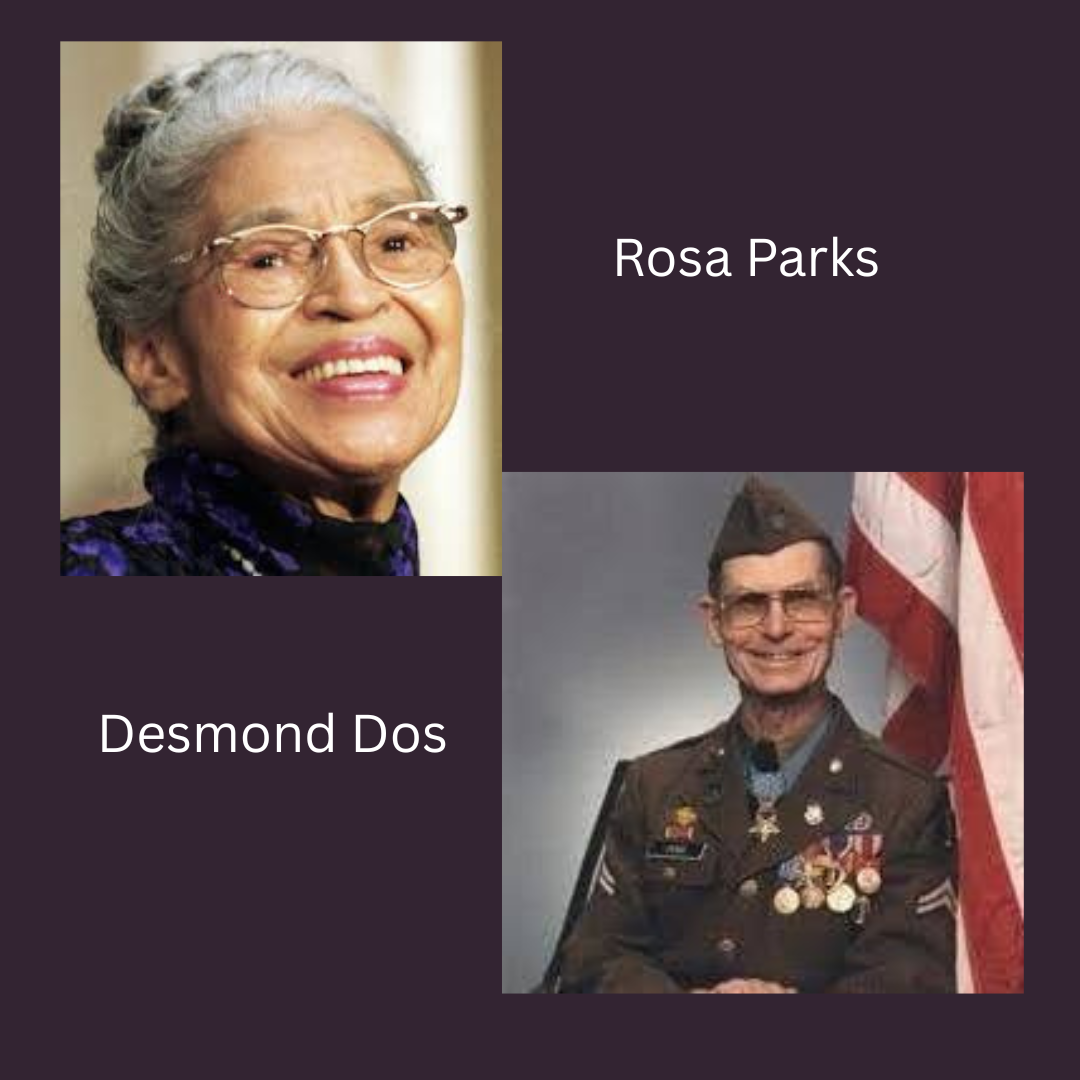
A quiet seamstress, Rosa Parks, refused to give up her seat, and in this gentle refusal to be judged by the pigments in her skin, started the end of racial segregation in America. Florence Nightingale walked through wards with her lamp and Desmond Doss refused to carry a riffle for one minute longer. They all changed our world.
.
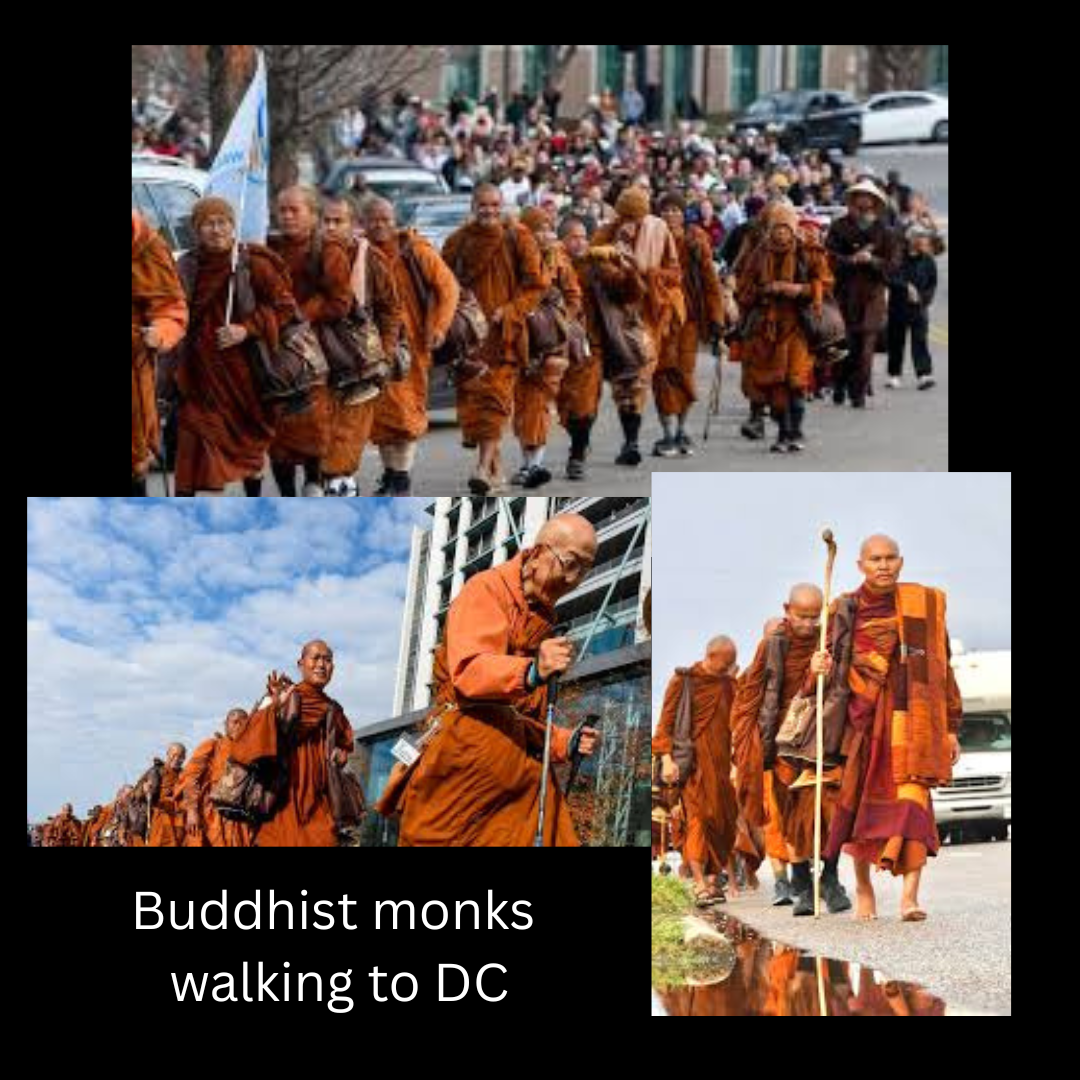
I watched like the rest of the world how 24 Buddhist monks started a quiet walk from Texas to DC (a short 3701km!) in October last year. Their journey covered ten states as they walked in single file, mostly in silence and barefoot, sleeping outdoors and relying on donations. Their purpose was not to protest but to remind people of unity, compassion, inner peace and healing. They wanted to remind the terribly polarised American nation that peace begins within. The general public, who are probably not as extreme as the world wants them to be, joined, supported and donated.
I was fascinated by this quiet walk. It reminded me of Ghandi’s Salt march opposing British rule, honouring women and uplifting the poor. Wonderful names that walked amongst us preaching the same message of humility and peace like Martin Luther King, Desmond Tutu, and the Dalai Lama all moved the world by inspiring average people to do what they can.
.
I love what Johsn Wesley (wonderful abolitionist and priest) said, and I see this in so many of the people I meet daily:
“Do all the good you can,
by all the means you can,
in all the ways you can,
in all the places you can,
at all the times you can,
to all the people you can,
as long as ever you can”
.
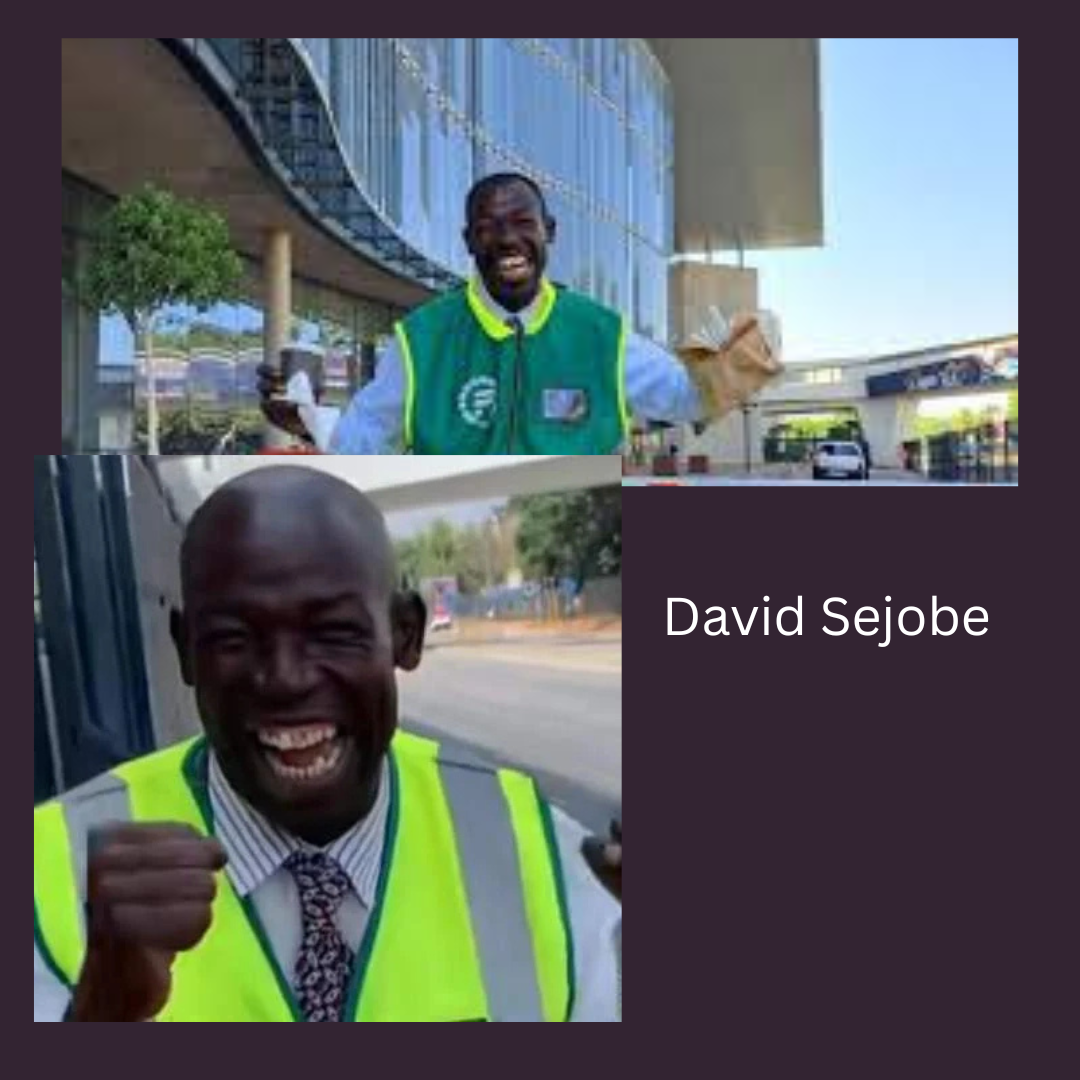
Did you also watch with utter delight as the story of David Sejobe unfolded? He was just another security guard who worked at the entry of the Multi-Choice office park on Bram Fisher in Randburg. He became famous, not because he split the atom, started a revolution, or discovered a new cancer treatment, but for his smile. Apparently everyone who travelled that busy road knew David. He would sing and smile to all the commuters on the road and his wonderful smile and friendly greetings welcomed those tired corporates and workers each day. His joy was contagious.
He was tragically killed in a hit and run last month. His death impacted an entire community of strangers. Suddenly, their long commute was not lightened by his smile. They were no longer encouraged by his selfless joy. People did not even realise how he changed their daily grind. Tributes, videos and photos of his happy presence flooded the internet. A billboard went up after his death right outside MultiChoice with his smiling face saying: “Every day is a good day to smile. Hoot to remember our Ntate David. “
R500,000 was raised for his family. People described him as “a ray of sunshine” and a reminder that an ordinary job done with consistent kindness can change the emotional climate of an entire street, or even a whole city. My favourite comment was: “If you can be anything in this world… be a David Sejobe.” What a wonderful legacy for a man that did not have a grand education, a powerful job or any real status.
This month, a mate phoned me to chat to me about an old friend of his, Sean.
Sean, like so many others of my generation, went to the army and was forced to fight in a war he did not believe in. He went to the border where he experienced horror after horror, lost close friends and was forced to do the dirty work politicians don’t have the courage to do themselves. He never recovered after the war and never settled. He travelled, did odd jobs, taught scuba diving and lived life as if each day was his last. Some say Sean had survivor’s-guilt.
Recently, his friends who fought in the border war with him but did manage to settle back into their lives after their military service, discovered Sean was ill… extremely ill. He had cancer, and because treatment was so expensive, he lost the little he had and ended up living in a tent. He was too embarrassed and too proud to tell his mates what was happening.
His friends did what friends do. They started a WhatsApp group, collected money, made plans and quietly, consistently, always protecting his dignity, put a plan in place so that Sean could be looked after, cared for and receive the best medical care possible for the last months of his life.
Sean’s friends are not extraordinary. They just did what needed to be done, just like so many other people we meet every day. Like Nthabiseng who gently washes cancer ridden bodies, Nobuhle who tenderly helps patients into bed, George who holds frail hands when the night is too long, Dr Jodi who sits with families for much longer than anyone expects, and Kundai who envelops broken hearted mothers in his comfortable hugs. It is not our Lodges or our policies, procedures or constitution that provide comfort; it is our people who decide to show up every single moment, every single day.
The longer I watch the world and work with my staff, the more convinced I am that it is definitely not presidents, generals or revolutionaries who bend the arc of history. It is tired friends on WhatsApp groups, smiling security guards at office parks, and old nurses who keep showing up for another night shift. Most of them will never see their names in a textbook, but they are the people who will be written in the stories and nervous systems of the people they loved and those to whom they gave so freely. We may never start a revolution or discover a cure, but today, where we are, we can still choose to “do all the good we can” – and trust that in ways we may never see, that will be enough.