
What do you remember?
My friend Dan’s mom and brother died in a car accident. Miraculously Dan and his father survived and had to navigate a life which was forever halved. Dan was only seven and hardly had the emotional capacity to try and process such grief. A few years ago, once he started his own family and had two little boys of his own, he started understanding his father’s grief better, and the real pain of losing a son.
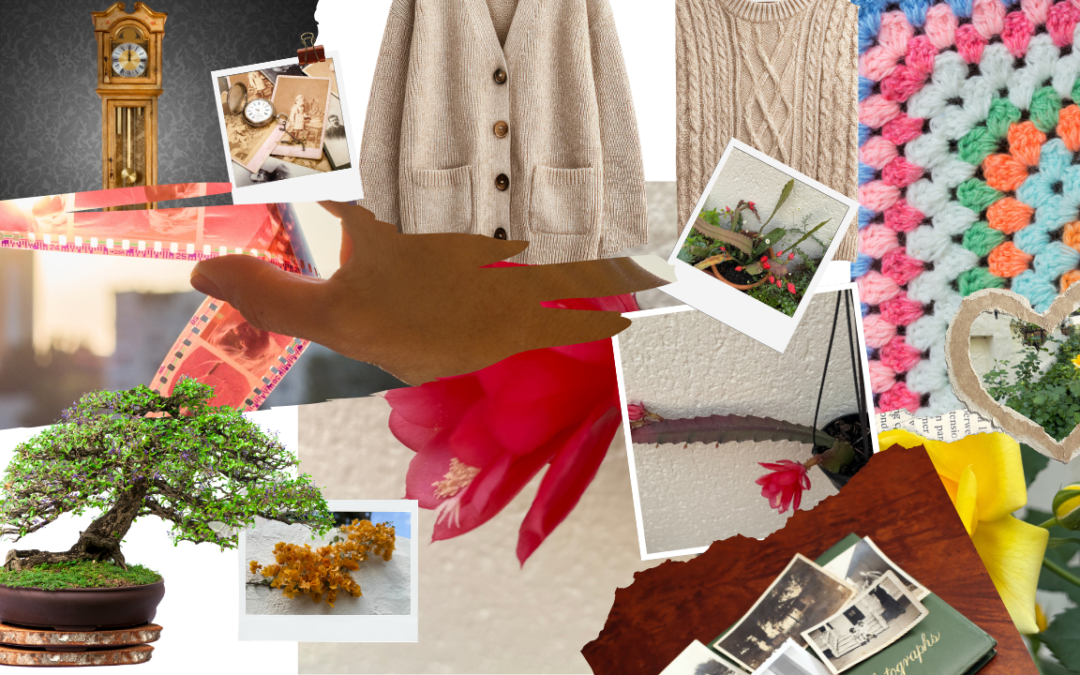
For the first time in years, Dan went and opened up a box in his storeroom filled with his little brother’s keepsakes. There was some clothing, a few dinky cars, a teddy he slept with and some art from kindergarten. Among the faded art works was a picture made of beans, macaroni and shells. Dan is an enthusiastic gardener and loves bonsais, and out of the 30 year old beans pasted on to the picture, he cultivated a beautiful little bonsai tree. He lovingly tends to it in memory of his brother.
It’s funny what we treasure isn’t it? Who would have thought a bean full of Pritt glue could bring such joy and healing after many years packed away in a box.
I look at my own garden and house. It is filled with worthless keepsakes that are priceless to me. My great grandfather died in 1979 when I was six. My memory of him is fragmented. My image of him is built from old photos, stories my aunts and uncles tell and my hazy memory of being in his house celebrating birthdays. My great aunt had a cutting of one of his red orchid cactus on her stoop. Every afternoon, I would visit her and walk past the cactus welcoming me into the front door. I doubt I really noticed it as a child or teenager. Like so many other things, this plant was just part of my life.
When my great aunt died a few years ago, I went and took a cutting of the plant, not sure it would grow. It has since sprouted beautifully and each Spring, it bursts out in bright red flowers. I love that their memory survives in this living thing, just like Dan’s bonsai which, like grief, he now tends to rather than just having it packed away.
Psychiatrist Vamik Volkan call these keepsakes “linking objects.” These are things we hold onto which remind us of a person who died or has been changed forever by disease or trauma. The newer term is “continuing bonds,” which puts emphasis on the fact that healthy grief is not about letting go, but about keeping an inner relationship with the person you love.
The linking objects we choose that remind us of our people are sentimental and sometimes silly. I battle to remove phone numbers from my phone, and admit that I listen to some voice notes of friends who have died when I miss them. Scent is a powerful reminder and many people keep clothes or pillows to remind them of a person. I have befriended a restaurateur who probably serves the best Italian food in Johannesburg. The first time I hugged her she started crying and said I smelled just like her mom. I now often just pop in if I have a few extra minutes in my day to give her a quick hug, and in this quirky little way she gets to feel closer to her mom… and I get out of cooking dinner by buying a frozen melanzane.
My husband cherishes his late mother’s recipe book. Seeing her hand writing and remembering the meals she made brings her back to him, even though she has passed away more than 30 years ago.
Certain sounds and songs can bring back a person too. The grandfather clock my own granddad made would remind us of him every fifteen minutes as the clock chimed in our house. I have memories of my father lovingly winding up the clock, once a week, and honouring his dad in this routine. Now, years after both my father and grandfather have passed away, it is my brother who winds the clock, continuing this memory and tending to our roots.
During the HIV/Aids crisis years in South Africa, many children lost their parents and grandparents. They suddenly did not really belong anywhere. To help them, The Sinomlando Centre ran a memory box project. To this day, they encourage children to make memory boxes that they fill with a variety of things that hold special meaning only they can understand: silly keepsakes, photos, maybe a blanket or toy.
We encourage a similar idea for patients with memory loss. We ask that loved ones bring music from home, a favourite cardigan, a book, a lipstick, a sweet treat, a laundry detergent. When someone can no longer remember, their loved ones do the remembering for them. We are the ones who are supposed to show up in this relay of life and pick up the baton.
The memories we share and the stories we hold can be the thread that links someone back to themselves, even when a disease is slowly locking them up where they are hard to reach. A song from 1945, the smell of lavender soap, a blanket crocheted by a loved one can all be linking objects that connect them with the past, with themselves and with others.
This morning my great grandfather’s orchid cactus is covered in red flowers again. He has been gone for 47 years, and my great aunt for five, but every Spring they turn up on my stoep, right on time. Dan prunes and loves a plant grown from a kindergarden picture. My husband makes bobotie following a recipe that still asks for left over minced veal, as if anyone has had this since the 1950’s. My nieces get to listen to their great grandfather’s clock. None of this is worth much on a balance sheet, but it is all priceless.